Artificial Intelligence (AI) is transforming the way businesses approach digital marketing. From analyzing customer behavior to creating personalized content and automating repetitive tasks, AI is helping marketers make faster, smarter, and more data-driven decisions. As competition continues to increase in the digital landscape, businesses that effectively integrate AI into their marketing strategies can improve efficiency, customer engagement, and overall business growth.
Understanding AI in Digital Marketing
Artificial Intelligence refers to technologies that enable machines and software to analyze information, identify patterns, and perform tasks that traditionally require human intelligence. In digital marketing, AI can process large amounts of customer and campaign data, predict trends, automate processes, and support marketers in making strategic decisions.
AI is no longer limited to large organizations. Businesses of different sizes can use AI-powered tools for content creation, customer support, advertising, analytics, email marketing, and search engine optimization.
How AI Is Changing Marketing Strategies
1. Personalized Customer Experiences
One of the biggest advantages of AI is its ability to personalize marketing experiences. AI can analyze customer interests, browsing behavior, previous purchases, and interactions to help businesses deliver more relevant content and product recommendations.
Personalized marketing can make communication more meaningful and help businesses build stronger relationships with their customers.
2. Data-Driven Marketing Decisions
Modern marketing generates huge amounts of data. AI can analyze this information much faster than traditional methods and identify patterns that may otherwise be difficult to recognize.
Marketers can use AI-powered analytics to understand campaign performance, identify customer trends, measure engagement, and make more informed decisions about future marketing strategies.
3. AI-Powered Content Creation
AI is increasingly being used to support the content creation process. Marketers can use AI tools to generate ideas, create outlines, analyze topics, develop variations of marketing copy, and improve existing content.
However, effective marketing content still requires human creativity, expertise, originality, and strategic thinking. AI works best as a support system rather than a complete replacement for human marketers.
4. Smarter Advertising Campaigns
AI can improve digital advertising by analyzing audience behavior and campaign performance. It can help marketers identify suitable audiences, optimize ad placements, adjust bidding strategies, and allocate budgets more effectively.
This allows businesses to focus their advertising efforts on audiences that are more likely to engage with their products or services.
5. Improved Customer Support
AI-powered chatbots and virtual assistants can provide quick responses to common customer questions. They can operate around the clock and help businesses manage repetitive customer service tasks.
When combined with human support, AI can create a more efficient customer service experience while allowing employees to focus on complex customer needs.
The Role of AI in SEO
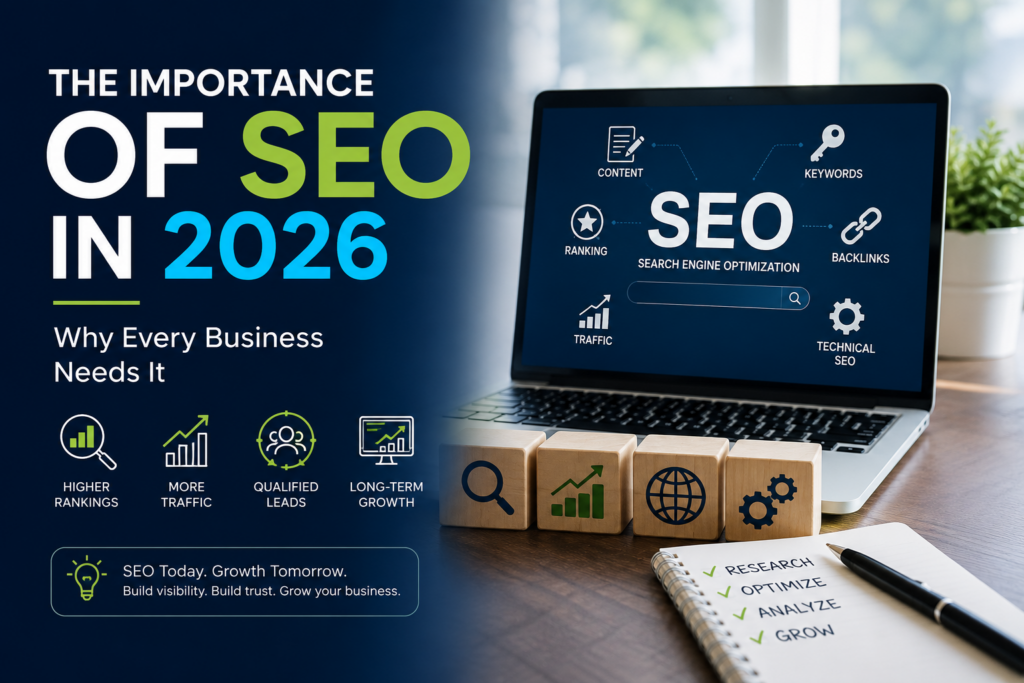
Artificial Intelligence is also changing Search Engine Optimization. AI can help marketers analyze keywords, understand search intent, identify content opportunities, monitor competitors, and evaluate website performance.
Modern SEO is becoming increasingly focused on providing useful, relevant, and high-quality information rather than simply targeting keywords. Businesses should therefore use AI to support SEO research while maintaining a strong focus on user experience and valuable content.
Benefits of AI for Businesses
Integrating AI into a digital marketing strategy can provide several important benefits:
- Greater efficiency: Automates repetitive marketing tasks.
- Better decision-making: Uses data to identify trends and opportunities.
- Improved personalization: Helps businesses deliver relevant experiences.
- Higher productivity: Allows marketing teams to focus on strategic activities.
- Better customer engagement: Supports faster and more relevant communication.
- Improved campaign optimization: Helps identify what is working and where improvements are needed.
Challenges of Using AI in Marketing
Despite its benefits, AI also presents challenges. Businesses must consider issues such as data privacy, accuracy, ethical use, content quality, and overdependence on automation.
AI-generated information may not always be accurate or appropriate for a particular audience. Human review remains essential, especially when creating brand messaging, making strategic decisions, or communicating important information to customers.
Businesses should also ensure that customer data is handled responsibly and that AI systems are used transparently and ethically.
The Future of AI in Digital Marketing
The role of AI in marketing is expected to continue expanding. Businesses will increasingly use AI for predictive analytics, personalization, automation, customer experience, advertising optimization, and marketing intelligence.
However, the future of successful marketing will not simply be about using more AI tools. The real advantage will come from combining AI capabilities with human creativity, strategic thinking, emotional intelligence, and brand expertise.
Companies that learn how to balance technology with human insight will be better positioned to adapt to changing customer expectations and competitive markets.
Conclusion
Artificial Intelligence is becoming an important part of modern marketing strategies. It enables businesses to analyze data more efficiently, personalize customer experiences, automate repetitive processes, and optimize marketing campaigns.
However, AI should be viewed as a powerful marketing partner rather than a replacement for human expertise. By combining AI technology with creative thinking, strong strategy, and a customer-focused approach, businesses can build more efficient and effective digital marketing campaigns.
The businesses that adopt AI strategically while maintaining authenticity and human connection will be better prepared for the future of digital marketing.